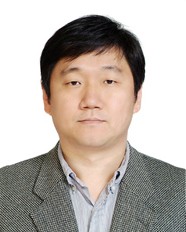
Prof. Songhun Yoon
Chung-Ang University, South Korea
Prof. Songhun Yoon was graduated from Department of Chemical Technology of Seoul National University as Ph. D. at 2005. His major has been focused on the electrochemical analysis and battery materials, especially about cathode materials preparation in lithium ion batteries. After working at LG Chem and Korea Research Institute of Chemical Technology (KRICT) during 8 years, he joined as faculty member at School of Integrative Engineering of Chung-Ang University at 2013. He published about 120 SCI papers with 7299 citations and 60 patents.
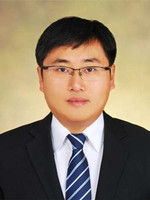
Assoc. Prof. Kiyoung Lee
Inha University, South Korea
Kiyoung Lee
studied chemical engineering at Inha
University, Republic of Korea, and received
his Ph.D. in 2013 from Friedrich-Alexander-Universität
Erlangen–Nürnberg (FAU), Germany. From 2013
to 2015, he worked as a postdoctoral
researcher at FAU, Germany, and the
University of California, Riverside, USA.
From 2016 to 2021, he served as an Assistant
and Associate Professor in the School of
Nano & Materials Science and Engineering at
Kyungpook National University, Korea. Since
2021, he has been an Associate Professor in
the Department of Chemical Engineering at
Inha University, Korea.
His current research interests focus on
electrochemical synthesis of functional
nanomaterials and their applications in
energy conversion and energy storage
devices, including advanced battery systems
and electrochemical energy technologies.
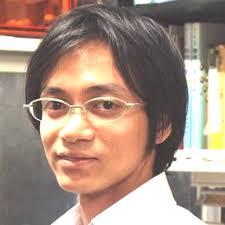
Assoc. Prof. Khoa
V. Le
Tokyo University of Science, Japan
Khoa V. Le received his Ph.D. in engineering from the Tokyo Institute of Technology, Japan, in 2011. He joined the Tokyo University of Science in 2015, where he is currently working as Associate Professor. His research interests include electro-optic effects in liquid crystals and molecular interactions in lyotropic systems. Recently, he has focused more on the research of water-based polymeric materials by combining lyotropic liquid crystals with hydrogels to create novel functionalities such as toughness and adhesiveness. His work aims to develop applications in biological alternatives, bio-adhesive materials, and microplastic capture materials.
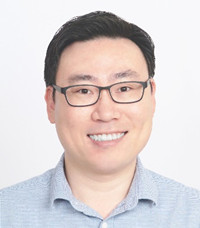
Assoc. Prof.
Young-Ki Kim
Pohang University of Science and Technology,
South Korea
Young-Ki Kim is currently Associate Professor in the Department of Chemical Engineering at Pohang University of Science and Technology (POSTECH), Republic of Korea. He received BSc degree in Physics at Korea University (2007) and MSE at Hanyang University (2009), Korea. He then received his PhD (2015) in Chemical Physics from Liquid Crystal Institute at Kent State University under the supervision of Prof. Oleg D. Lavrentovich. Prior to joining POSTECH, he had worked as a postdoctoral associate in the laboratory of Prof. Nicholas L. Abbott in the Department of Chemical Engineering at University of Wisconsin-Madison (2015–2018) and Cornell University (2018–2019). His research focuses on the design of functional materials using liquid crystallinity for a variety of applications including drug delivery systems, chemical/bio sensors, micro-robot, and electro-optical devices. Prof. Kim has published over 60 papers in peer-reviewed journals including Nature, Science, Advanced Materials, Nature Communications, and Physical Review Letters.
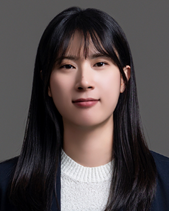
Assist. Prof. Sul Ki Park
Jeonbuk National University, South Korea
Sul Ki Park is currently an Asisstant Professor in the School of Semiconductor and Chemical Engineering at Jeonbuk National University (South Korea). She received her Ph.D. in Chemical Engineering from Sungkyunkwan University, South Korea, in 2019. Following her doctoral studies, she worked as a postdoctoral research associate at the Department of Engineering, University of Cambridge, focusing on advanced energy storage systems. She then joined Northvolt in Sweden, where she gained industrial experience in next-generation battery development. Her research centers on batteries and nanostructured materials.
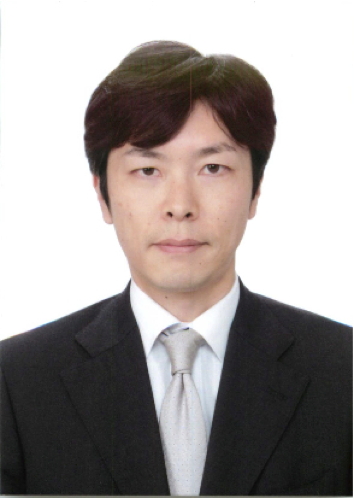
Prof. Yasuhiro
Morisaki
Kwansei Gakuin University, Japan
Yasuhiro Morisaki is Professor at Kwansei Gakuin University. He graduated from Kyoto University in 1995, and then, he received Ph.D. from Kyoto University in 2000. After a six-month postdoctoral stay at Osaka National Research Institute (currently called as National Institute of Advanced Industrial Science and Technology (AIST) Kansai), he became Assistant Professor at Kyoto University in 2000. From 2004 to 2005, he carried out postdoctoral work at the University of Alberta. He became lecturer at Kyoto University in 2008 and full Professor at Kwansei Gakuin University in 2015. His research interests focus on polymer and organic synthesis, in particular, synthesis of functional molecules based on planar chiral cyclophane for opto-electronic materials.

Prof. Anja Pfennig
HTW-Berlin University of
Applied Sciences, Germany
Prof. Anja Pfennig was born in Büdelsdorf, Germany in 1970. She studied Minerology at the Rheinische Friedrich Wilhelms University Bonn, Germany, where she graduated in 1997. Her Ph.-D. in the field of ceramic moulds for liquid metal casting was earned in 2001 from the Friedrich Alexander University of Erlangen, Germany. She then worked for Siemens Energy in charge of ceramic shields for stationary gas turbines and transferred to Berlin in 2008 where she conducted scientific research on the oxidation of high temperature materials and corrosion behavior of steels used in Carbon Capture Techniques. 2009 she became full professor at the Applied University Berlin, HTW where she currently teaches material science for engineering students. Anja Pfennigs research interest and expertise is in the field of corrosion fatigue of materials at high temperature and high pressure simulating geothermal environments.
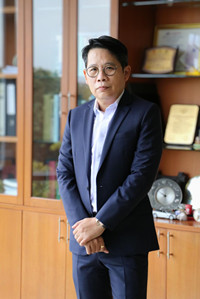
Prof. Vissanu Meeyoo
Mahanakorn University of Technology, Thailand
Prof. Vissanu
is a distinguished academic leader and innovator
with over 20 years of expertise in materials
science, focusing on catalytic processes,
renewable energy, and membrane technology. He
holds a Ph.D. in Chemical Engineering from the
University of New South Wales, Australia (1997),
where he initially researched catalytic
processes for odor control.
His research portfolio has since expanded to
include advanced air pollution control
technologies, sustainable hydrogen production,
and biogas upgrading, contributing to critical
solutions in environmental sustainability.
“He is renowned for his interdisciplinary
approach, integrating chemical engineering with
sustainable materials science to push forward
innovative technologies in environmental and
energy sectors.His work not only bridges
academic and industrial applications but also
addresses key challenges in sustainability and
green energy.”